
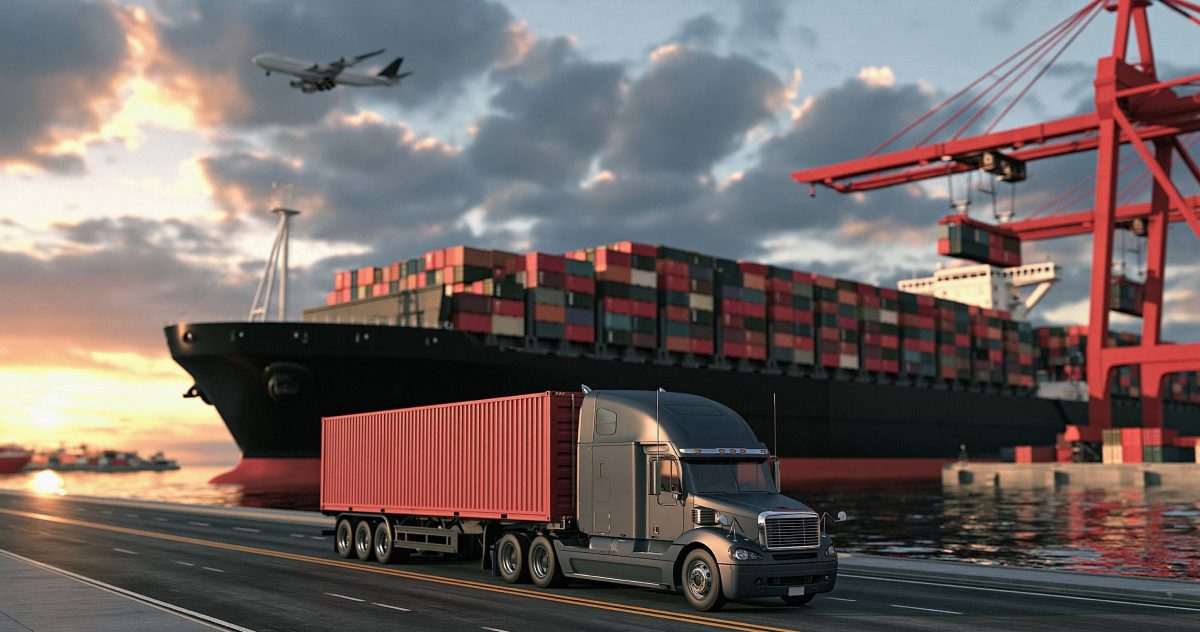
Small freight forwarders often struggle to compete with giants like Kuehne+Nagel, DHL, and DB Schenker, which move millions of TEUs annually and are able to negotiate volume discounts that smaller forwarders simply cannot match. The gap is real, and couple that with IT budgets that dwarf what most forwarders spend on their entire operation, competing can be a nightmare.
However, size is not the only thing that wins freight. Freight forwarders:
Small freight forwarders do all of this too. The difference is how they do it. This guide covers where smaller freight forwarders hold real advantages over the global giants, and what it takes to turn those advantages into lasting business.
Small freight forwarders rely on asset-light models, not owning any physical transport assets. They do not run their own ships or planes. Instead, they:
Freight consolidation is a common service that reduces client costs by combining smaller shipments into full container loads. But what separates small forwarders from larger forwarders is the way those services get delivered. Small freight forwarders typically assign a dedicated point of contact to clients. That one person knows the account and always picks up the phone. At a large company, you might talk to a different person every time you call.
Small forwarders can specialize in niche markets to gain a competitive advantage. For example, a forwarder that focuses on pharmaceutical cold-chain shipments builds deep expertise that a generalist competitor cannot match. The same is true for hazardous materials, exhibition freight, or oil and gas project cargo.
Expertise wins, and niche specialization in trade lanes or commodities works because clients in these sectors care more about specialized knowledge and reliability than about lower prices. However, domain knowledge like knowing a specific trade lane inside out, which carriers perform, which customs brokers move fastest, and which warehouses to avoid comes from doing the same route hundreds of times, which is not something that most freight forwarders have.
The choice of mode matters here. A forwarder that specializes in ocean freight between Southeast Asia and the U.S. West Coast will understand transit times, carrier reliability, and port congestion patterns for that lane better than a generalist who handles everything everywhere. The same applies to air freight corridors or rail services between China and Europe. Even land transportation is the same.
Trade lane specialization also makes it easier to negotiate competitive rates with carriers, because you bring consistent volume on specific routes. Carriers prefer reliable lane partners over customers who ship sporadically across dozens of routes. And shippers seeking cost-effective options for a specific route will choose the forwarder with the strongest carrier relationships on that lane.
Ten years ago, large companies ran enterprise systems that cost millions, while mid-sized forwarders relied on spreadsheets and email. Fortunately, that gap has closed. In 2026, digital freight technology is readily available and non-negotiable for small forwarders. .
Small forwarders can use cloud-based freight management software to handle operations ranging from quoting and booking to invoicing and compliance, all without the capital spending that once locked smaller operations out of the market entirely. Digital tools help small forwarders appear more established to clients and partners who might otherwise assume a smaller operation means less capability.
Freight forwarding software automates documentation and billing processes, which means the team spends less time on repetitive tasks and more time on work that actually grows the business. Automation minimizes errors in billing and documentation, a problem that hits small forwarders harder because they have fewer people to catch mistakes. Small forwarders can improve efficiency with freight forwarding software without needing to hire more staff.
Small forwarders can respond faster to RFQs with modern systems. Instead of building quotes manually from rate sheets and emails, the software pulls current rates, applies margins, and generates a quote in minutes. Small forwarders face delayed quotations due to manual processes, and that delay costs deals. When a shipper sends an RFQ to five forwarders, the first accurate quote back often wins.
Data is where mid-sized forwarders can punch above their weight. With the right freight management software, even a 20-person operation can track which trade lanes are most profitable, which carriers deliver on time, and where costs are leaking.
Data-driven decisions replace gut-feel pricing with numbers that hold up. If data shows a particular route consistently runs 15% over budget, you can adjust pricing or switch carriers before it eats your margin. If a client's shipment volumes are growing quarter over quarter, you can negotiate better rates before they even ask.
Real-time shipment visibility builds customer trust. When your client can log into a portal and see exactly where their cargo is, they stop calling to ask for updates. Real-time shipment visibility also reduces customer follow-up calls, freeing your operations team to focus on exceptions rather than status reports. Technology turns a small team into an efficient one.
Most forwarders only call the client when something goes wrong, which is a backward approach.
Proactive communication means reaching out before the client asks. It means sending a message when a vessel is delayed, instead of waiting for the client to discover the delay on their own. They provide proactive communication about potential shipment bottlenecks before they lead to missed deadlines. Proactive communication builds long-term client relationships because it shows the client you are paying attention even when they are not watching.
Shipment tracking tied to automated alerts is one way to do this. The system flags a delay, and an email goes to the client with an update and a plan. No phone tag and no surprises. Customer satisfaction increases because the client feels like a partner rather than just a ticket number.
Pricing matters too. Small forwarders can negotiate more straightforward and transparent pricing. When your communication is open about costs, surcharges, and transit times, clients trust you more. And trust, for most shippers, matters as much as price.

No small forwarder can cover every country on its own. But there is no need to, because strategic partnerships can expand capabilities for small freight forwarders without the overhead of opening offices in 30 countries. By partnering with other smaller forwarders in different regions, you can offer clients full door-to-door service on global trade routes you could not cover on your own, from customs clearance at origin through to land transportation and final delivery at destination, with one invoice and one point of accountability. Industry associations and freight networks exist specifically to connect forwarders who want to work this way.
Freight brokers play a different role from forwarders, but the two often work together, especially on domestic legs, where a broker's carrier network fills gaps that a forwarder cannot cover alone. A good relationship with freight brokers gives you access to capacity when your usual carriers are full. It also gives you options on routes where you do not have direct contracts.
Carrier relationships matter even more. Carriers want forwarders who bring them consistent, reliable freight. If you specialize in a trade lane and ship 40 containers a month on the same route, you get better rates than a generalist who ships 5 containers on 8 different routes. That consistent volume is how small forwarders compete on price without needing the global scale of an industry giant.
Additional services also help. Offering document processing, customs documentation, and compliance management on top of the core freight move makes you harder to replace. Clients with growing customer expectations want one partner who can handle the full process from booking through to final delivery, not five different vendors.
You do not need a six-figure marketing budget to reach the right clients. But you do need to be visible where your clients look. The following helps:
Manual data entry increases the risk of documentation errors, and small forwarders often struggle with cash flow due to late invoicing. These are operational problems that drive customer dissatisfaction when they pile up. The right systems and processes fix both. Operational stress leads to customer dissatisfaction for small forwarders when the team is so buried in admin that the client experience suffers.
Freight forwarders of all sizes have relied on NewageNXT for over 20 years. With offices in Dubai, India, the UK, and the USA, NewageNXT provides freight management software and back-office services built for the way forwarders actually work. NewageNXT, the company's platform, lets organizations bring sales, operations, and finance into a single system, reduce manual work, and gain a clear view of their data without the IT overhead that used to accompany such setups. If you want to see how it works for a business your size, schedule a consultation.
Q1. What is the main advantage small freight forwarders have over global giants?
Personal attention. Small freight forwarders typically assign a dedicated point of contact to each client, resulting in faster responses, better account knowledge, and tailored solutions built around the client's actual needs. Small forwarders can also offer personalized service that larger firms cannot, thanks to their flexibility in adjusting workflows for each account.
Q2. How does freight forwarding software help small forwarders compete?
Freight forwarding software automates documentation and billing processes, reducing repetitive tasks and human error. Small forwarders can respond faster to RFQs with modern systems, and automation reduces errors and improves margins for small forwarders. Cloud-based tools give smaller teams the same capabilities that once required enterprise-level budgets.
Q3. Why should small forwarders specialize in niche markets?
Specialization builds deep expertise that generalist competitors cannot match. Small freight forwarders focus on niche specialization in trade lanes or commodities because clients in those sectors value specialized knowledge over low price. A forwarder who knows a specific route or cargo type inside out wins on reliability, not just cost.
Q4. How does proactive communication improve customer satisfaction?
Proactive communication means alerting clients to delays, routing changes, or documentation issues before they have to ask. Real-time shipment visibility builds customer trust. The client sees exactly what is happening. This reduces support calls, prevents surprises, and turns a transactional relationship into a long-term partnership.
Q5. Can strategic partnerships replace the need for a global office network?
Yes. They often form network partnerships to handle global shipments across borders they cannot cover alone. Strategic partnerships can expand capabilities for small freight forwarders by connecting them with trusted forwarders in other regions, giving clients full coverage on global trade routes without the cost of opening offices everywhere.

.svg)




.svg)
.svg)